UX Research That Actually Ships: A Practical Framework
Leah Fernandes
Head of Design · June 30, 2026 · 5 min read
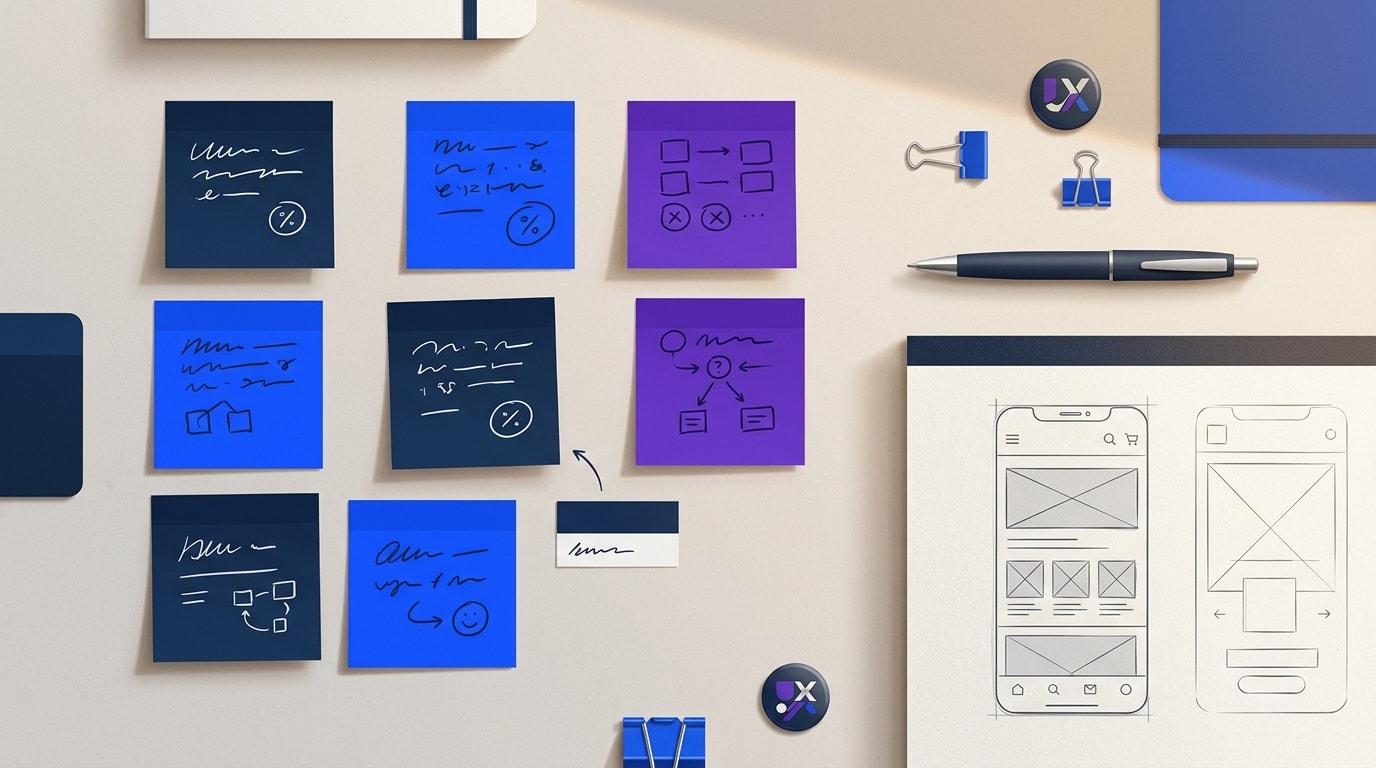
Every product team says research matters. Almost every product team cuts it first when a deadline tightens. That's not because research is undervalued — it's because most teams have only ever seen research done one way: weeks of recruiting, a formal discussion guide, a polished readout deck. When a sprint is two weeks long, that process doesn't get "trimmed." It gets skipped entirely.
Why "Lean" Doesn't Mean "Skipped"
The idea that useful research has to be slow and expensive is largely inherited, not inherent. The discount usability testing tradition — running quick, informal tests with a handful of participants — has been showing for years that a small, fast study catches the large majority of usability problems a much bigger one would find. Lean UX applies the same logic to the whole research cycle: small studies, rapid synthesis, and a tight, direct line back to the next design decision, rather than a comprehensive report nobody has time to act on.
This isn't a lower-quality version of research. It's research sized correctly to the size of the decision. A pricing-page redesign and a one-button copy change don't warrant the same research investment, and treating them as if they do is exactly why research gets deprioritized in the first place.
A Research Loop That Fits Inside a Sprint
The loop that actually survives contact with a real sprint looks like this:
- Frame one assumption — not "let's learn about our users," but "we believe first-time visitors don't understand what this button does." One testable claim, not a research agenda.
- Recruit a small number of participants. The classic finding that five users surface the large majority of usability issues in a given flow still holds — beyond that, you're mostly hearing the same problems restated.
- Run the session against whatever exists — a prototype, a paper sketch, a competitor's live product used as a stand-in. Moderated if you can, unmoderated if you can't.
- Synthesize the same day. Waiting a week to write up findings means the team has already moved on and the research arrives too late to change anything.
Paper Prototypes and Other Shortcuts
One of the most underused tools in this loop is the deliberately unfinished prototype. A paper sketch, or a Figma frame with only one path wired up, is far faster to produce than a polished flow — and because it's obviously unfinished, participants give more honest, less polite feedback. Teams that wait for something presentable before testing it usually end up testing a decision that's already effectively locked in.
A Pre-Release Checklist
Before shipping anything that touches a core flow, run through a short list rather than skipping straight to launch:
- Has anyone outside the team actually attempted the flow, even once, unscripted?
- Does the change hold up against the original assumption it was meant to test — not a different one that emerged along the way?
- Is there one open question the team is knowingly shipping without an answer to? Name it explicitly rather than letting it go unspoken.
None of this replaces deeper, longer-cycle research when a decision genuinely warrants it — a new product line or a fundamental repositioning still deserves real discovery time. But most day-to-day product decisions don't need six weeks of research to avoid being a guess. They need one good afternoon.